
Running a Sex Offender Check in Lee County
Start with the Arkansas Sex Offender Notification System, the public search managed through the Arkansas Crime Information Center. Select Lee County for a broad county view, or narrow the results by a Marianna address, city, ZIP code, place, or name. The registry is the main online channel. Research found no separate Lee County sheriff registry map, public offender list, or notification app.
Use more than one field when names are common. An address search is useful for a home, school route, or nearby block, while the county filter catches publishable entries outside Marianna. A name search works best when the spelling and aliases are known. For a question about a registration that does not appear online, contact the law-enforcement agency with local jurisdiction. Public visibility depends on Arkansas risk level and statutory category.
A result should be checked against the profile rather than treated as a complete list of everyone subject to registration. Arkansas publication rules make the public website a notice system, not a full copy of ACIC's law-enforcement registry. Save the search terms and date when a question needs follow-up. That gives the sheriff or ACIC a clear account of what was searched without spreading a person's information beyond the safety purpose.
Lee County Registry Jurisdiction
The Lee County Sheriff's Office is the local starting point for county-jurisdiction registration questions. Its office is at 15 East Chestnut Street, Marianna, AR 72360, and the published phone is 870-295-7775. A person moving to or returning to Arkansas must register with the law-enforcement agency that has jurisdiction within three business days of establishing a residence.
Inside Marianna, call the Marianna Police Department at 35 S Poplar Street, Marianna, AR 72360, 870-295-2508, to confirm whether city police or the sheriff handles the specific address. That call matters because the responsible office follows jurisdiction, not merely the Lee County name in a search result. No local online registration form or verification calendar was located, so phone confirmation is the sound official fallback.
Searching the Arkansas Sex Offender Notification System
ACIC manages the Arkansas public system under the Department of Public Safety. The search does not publish every registrant in the same way. Level 3 and Level 4 profiles are required on the public website, while only certain Level 2 records qualify for public access. Use this process to search Lee County records:
- Open the official Arkansas registry and review its use conditions.
- Select Lee County or enter a city, ZIP code, address, place, or name.
- Compare the result list with known identifiers and map context.
- Open the matching profile and read the level, address, offense, and status fields.
| Field Label | Type | Required | Notes |
|---|---|---|---|
| Address | Text/map | No | Shows publishable offenders near an Arkansas address. |
| City or ZIP | Text/select | No | Narrows a search to Marianna or another local postal area. |
| County | Select | No | Choose Lee for a county-wide result set. |
| Place or Name | Text | No | Supports place-based review or a known person's name. |
| Map/list view | Map/list control | No | Displays results spatially; available controls may vary. |
Lee County Map Search Choices
The official Arkansas registry screen shows why the search fields should be treated as different tools, not duplicates.
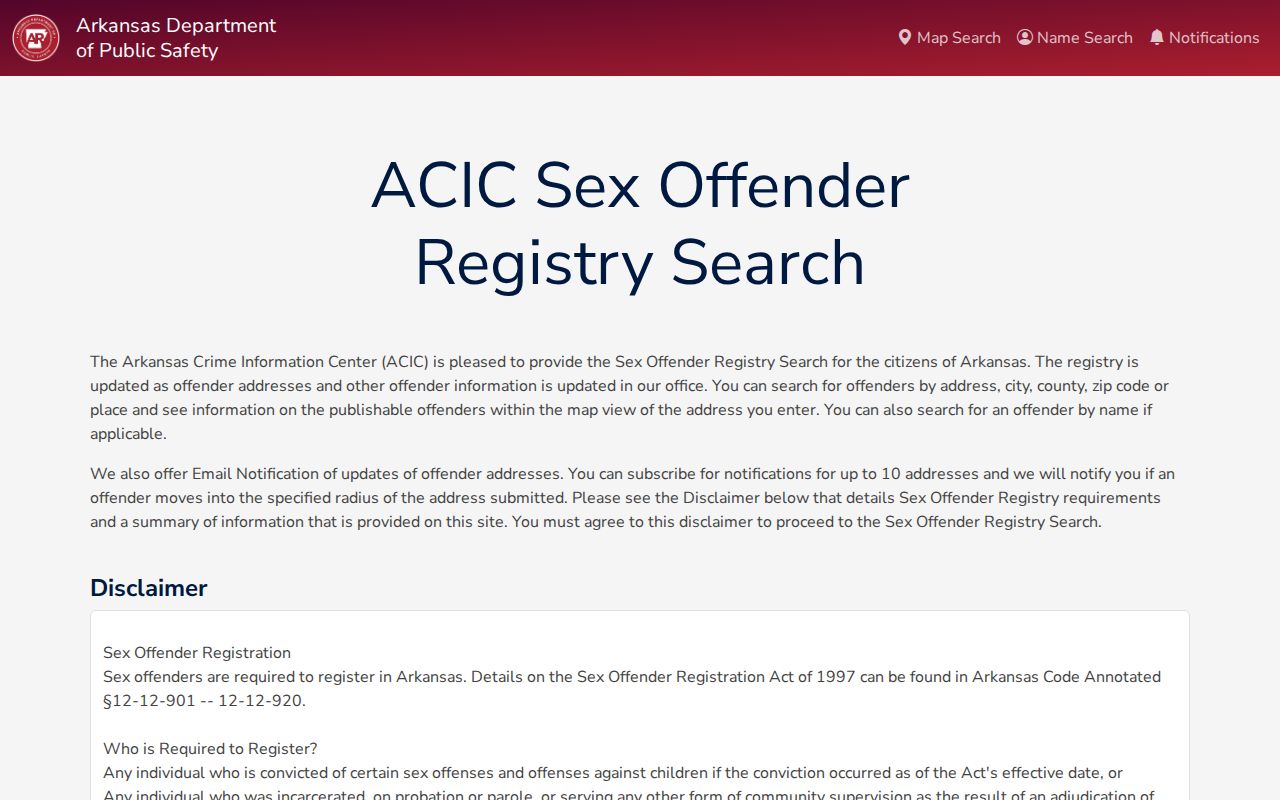
A county search is the broadest Lee County starting point. City and ZIP filters reduce the area, but town borders and postal lines do not always match law-enforcement jurisdiction. An address or map view is better for a known location. Name searches answer a different question and may need aliases. When a result seems missing, do not infer compliance or noncompliance from the screen alone.
Marianna is Lee County's main records hub, but Moro and Rondo searches may work better through the Lee County filter than through a town-only query. Small-town names, rural routes, and mailing addresses can describe the same general area in different ways. Try the county view first, then narrow it with the map. If the map and written address appear inconsistent, report the concern to the proper agency and let trained staff verify the registration record.
What a Registry Profile Shows
A public profile brings together identifiers, location information, the risk designation, and offense data that Arkansas law permits the system to publish. Review the whole profile rather than relying on a pin or name alone. Some fields may be limited because Level 1 offenders are generally outside the main public-web category, Level 2 access depends on statutory facts, and juvenile, sealed, or protected information can be restricted.
Match several details before concluding that a profile concerns the person or place in question. A shared name is not enough. Aliases, physical description, image, jurisdiction, and offense information can help distinguish records. Location displays should also be read with care, since they are public-notification data rather than proof that a person is present at a spot at a given moment. The profile's current status carries more value than an old screenshot saved by someone else.
| Name & Aliases | Published names and known aliases used to distinguish a profile. |
|---|---|
| Photo & Physical Description | A current public image, when available, and descriptive identifiers. |
| Registered Address | The publishable registered location or a map display. |
| Offense & Statute | The qualifying offense information or statutory category. |
| Level / Tier | Arkansas's assessed risk level and related public visibility. |
| Registration Status | Jurisdiction, compliance, or publication information made public. |
Lee County and National Results
The Arkansas system is best for an address or person tied to Lee County. The Dru Sjodin National Sex Offender Public Website adds a cross-state layer.
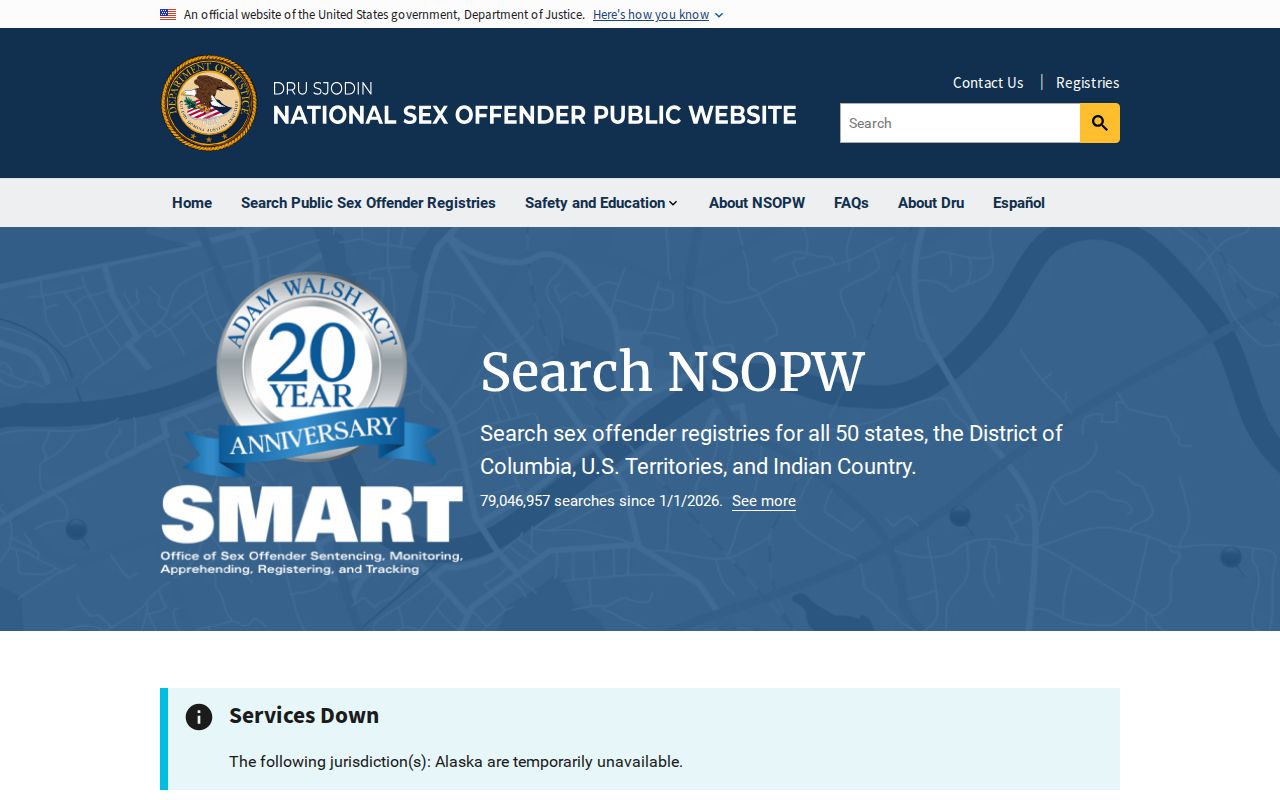
NSOPW searches participating public registries across jurisdictions. Use it when a person recently moved, works across a state line, or has an unknown prior address. Then return to the Arkansas profile for the state-specific level and local registration details. Neither tool replaces an urgent call to law enforcement when there is an immediate safety concern.
Differences between the two searches do not automatically mean one is wrong. State publication rules, update timing, search matching, and the jurisdictions included in a national query can affect the result. Record the state that supplied a profile, then contact that state's registry authority for a status question. For an Arkansas address in Lee County, local jurisdiction and ACIC remain the most direct verification channels.
Registration Requirements and Levels in Arkansas
Arkansas requires people covered by the Sex Offender Registration Act of 1997, Ark. Code Ann. §§ 12-12-901 through 12-12-920, to register. Covered groups include people convicted of listed offenses, certain supervised people whose adjudication was in place at the Act's effective date, some people acquitted on mental disease or defect grounds, people covered by the prior habitual-child-offender law, and out-of-state registrants who move or return. ACIC describes visibility by risk level, but the research did not publish one universal duration or verification frequency for every row. Confirm those duties with the registering agency.
| Risk level | ACIC description | Public visibility |
|---|---|---|
| Level 1 | Low Risk | Not the main public-web category in ACIC's summary. |
| Level 2 | Moderate Risk | Certain profiles are public when statutory victim-age and offender-age facts apply. |
| Level 3 | High Risk | Public website availability is mandated. |
| Level 4 | Sexually Violent Predator | Public website availability is mandated. |
Lee County Assessment Gaps
Every Arkansas registrant must submit to assessment through the Sex Offender Screening and Risk Assessment Program coordinated by the Arkansas Department of Correction. A person who does not submit is assigned Risk Level 3 by default. That rule can surprise readers because the number may reflect failure to complete assessment, not a completed finding through the normal process.
Failure to register, report an address change, or comply with assessment duties is a Class C felony. Suspected noncompliance should go to Lee County law enforcement, not to social media or personal confrontation. For state-level registry help, ACIC lists its registry manager at 501-682-2222 and 322 S. Main Street, Suite 615, Little Rock, AR 72201.
The public should report facts, not try to decide whether an offense occurred. Useful details include the address at issue, the date of the observation, and the public profile that prompted the concern. Law enforcement can compare that information with nonpublic registration data and decide what follow-up is lawful. This protects the community while reducing the risk of a false claim based on an old address, a similar name, or a misunderstood map marker.
Lee County Registry Access Rules
The Arkansas court rules site provides the broader official setting for access limits on court-related information.
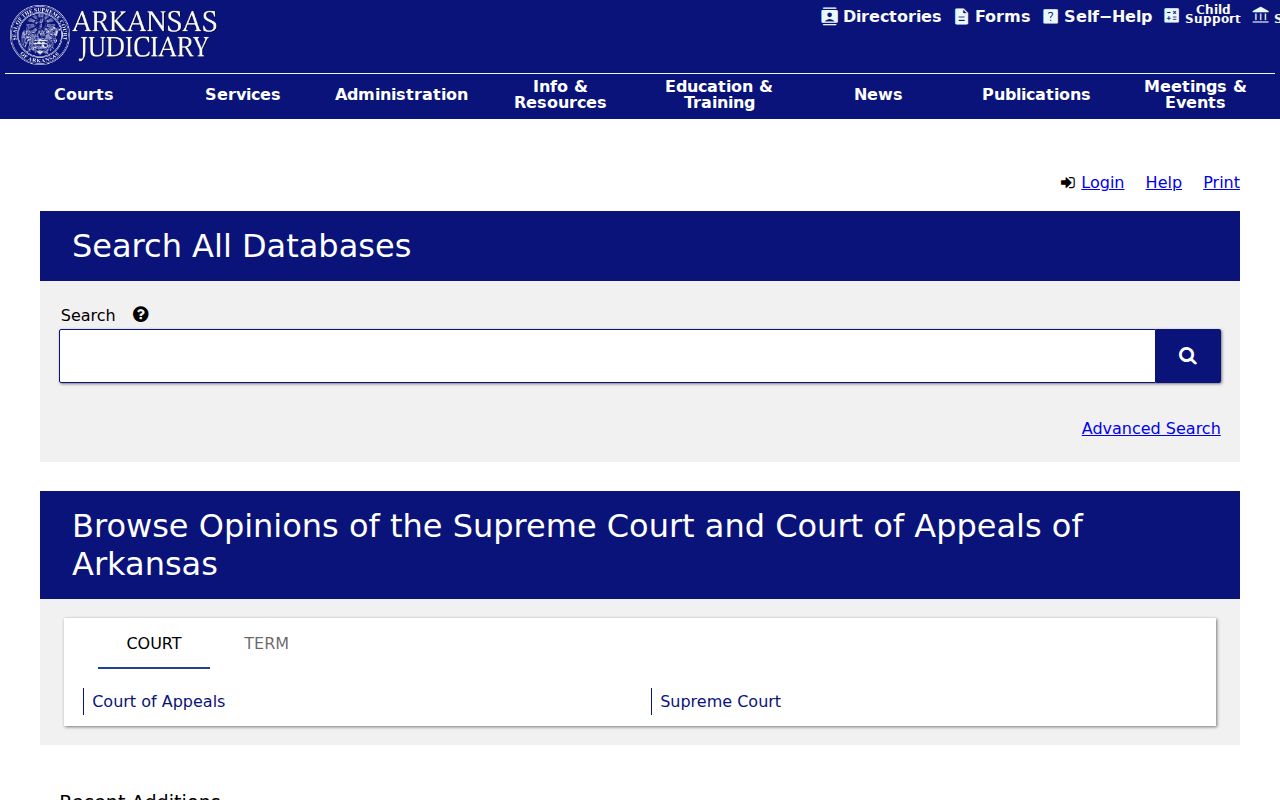
A registry profile and a court file serve different purposes. The registry publishes selected safety information under its own statutes and risk rules. A Lee County court case may show charges and disposition but should not be treated as a substitute for current registration status. Restricted or sealed information also may not appear in either public channel in the same form.
Lawful Use and Community Notification
Registry data exists for public safety and community awareness. Use it to plan a conversation with family members, understand nearby published locations, or identify the right law-enforcement agency for a concern. Do not threaten, follow, expose, or confront a listed person or anyone in that household. Call 911 for an immediate danger. For a suspected reporting or address violation that is not an emergency, contact the Lee County Sheriff's Office or the police agency with jurisdiction.
Misuse Warning: Harassment, threats, vigilantism, retaliation, and unlawful discrimination based on registry data can lead to criminal or civil consequences. Arkansas's registry laws, Ark. Code Ann. §§ 12-12-901 through 12-12-920, provide information for safety, not punishment by members of the public.